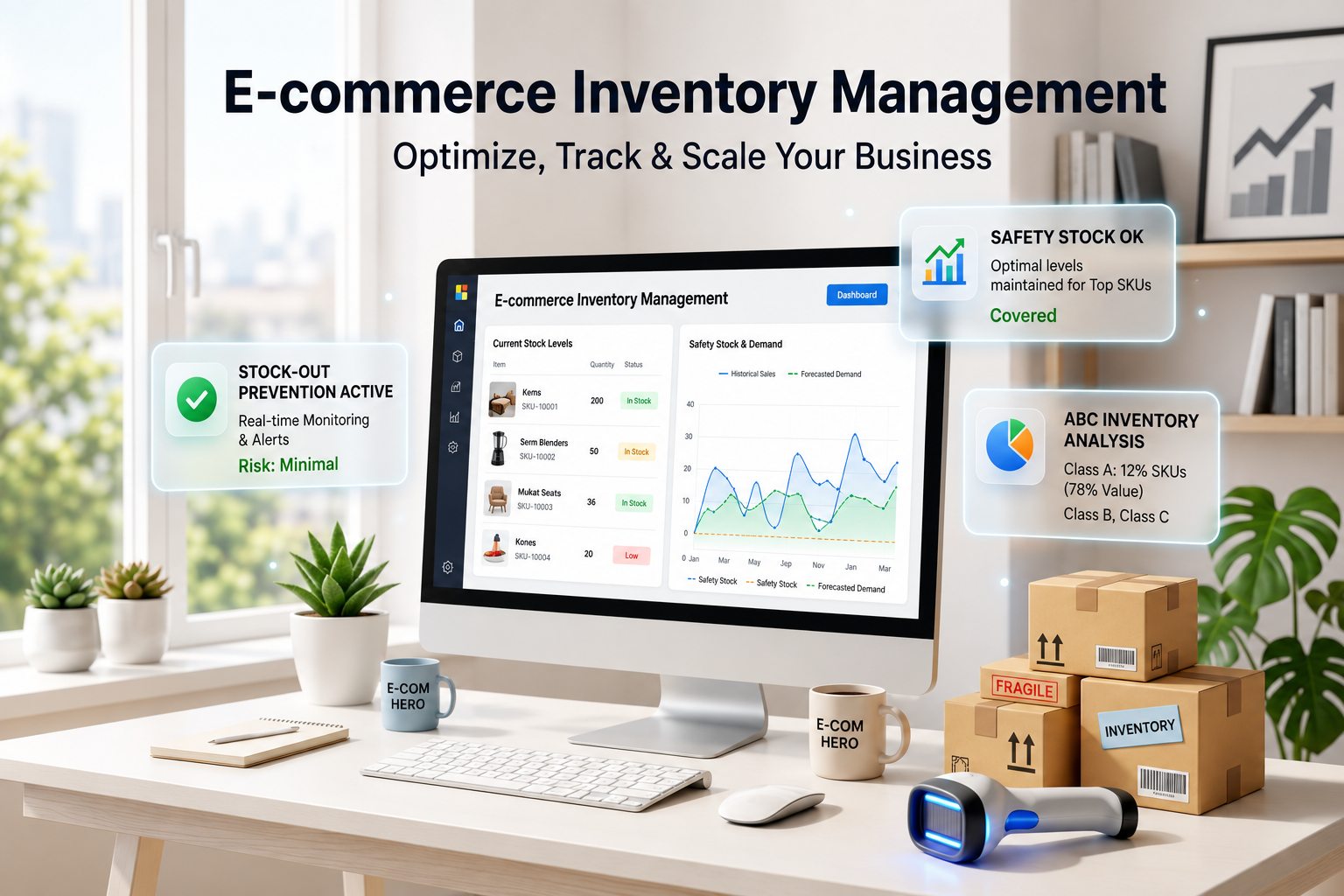
Inventory is the biggest asset of an e-commerce business, but it can also be its biggest liability. If you have too much stock, your cash is locked up (Dead Stock). If you have too little stock, you lose sales and your search ranking drops (Stock-out). Finding the "Sweet Spot" is the key to a profitable online store.
In this guide, we will share practical inventory management tips for sellers on Meesho, Flipkart, and Amazon to help you stay lean, fast, and profitable.
1. The Danger of "Stock-outs"
On marketplaces like Amazon and Flipkart, "availability" is a major ranking factor. If your best-selling product goes out of stock for even 3 days, you lose your search position. When you restock, it can take weeks to reach the same sales volume again.
- Lead Time Calculation: Always calculate how many days it takes for your supplier to deliver the goods. If it takes 7 days to restock, you should place an order when you still have 10 days of stock left.
- Safety Stock: Always keep a small buffer (e.g., 10-15% extra) to handle sudden spikes in orders during weekend sales.
- Rank Recovery: If you do go out of stock, use a small "Price Drop" or "Ad Campaign" the moment you restock to quickly gain back your lost search ranking.
2. SKU Naming Strategy (Simple & Deep)
As you grow, you will have hundreds of variations (size, color). A messy SKU system will lead to wrong shipments. A "Smart SKU" tells you what the product is just by looking at the code.
Example: Instead of "SKU001", use "TSHIRT-COT-RED-L" (Tshirt - Cotton - Red - Large). This simple naming convention reduces packing errors by 90% and makes inventory counting much easier.
3. JIT (Just-in-Time) vs. Bulk Sourcing
Choosing the right sourcing method depends on your product's popularity:
- Just-in-Time (JIT): Buy small quantities frequently. This is best for new products where you don't know the demand. It keeps your cash free.
- Bulk Sourcing: Buy large quantities once a month. This is best for your "A-Category" (best-selling) products. You get a lower price from the manufacturer, which increases your profit margin.
4. Managing "Dead Stock"
Dead stock is inventory that hasn't sold in 60-90 days. It occupies space and wastes money. The longer it sits, the less valuable it becomes.
- Liquidate Fast: If a product isn't moving, don't wait. Run a "Clearance Sale," offer a deep discount, or bundle it with a fast-moving item as a free gift.
- Analyze Trends: Use your seller dashboard data to identify slow-moving SKUs before they become dead stock.
5. The ABC Analysis
Divide your inventory into three categories:
- Category A: Your top 20% of products that generate 80% of your revenue. Monitor these daily. Never let them go out of stock.
- Category B: Mid-range products with steady sales. Review these weekly.
- Category C: Large variety of products with low sales. Review these monthly and keep very low stock levels.
6. Use Bin Mapping in Your Warehouse
Even a small warehouse needs organization. Assign a "Bin Number" to every shelf and location. When a picker goes to find an item, they should know exactly which shelf and row to look at. This reduces "Mis-shipments" and speeds up the dispatch process.
7. First-In, First-Out (FIFO)
Always sell your oldest stock first. This is especially important for products with expiry dates (like beauty or food) or fashion items that might go out of style. Arrange your warehouse so that new stock is placed at the back and old stock is at the front.
8. Planning for Seasonal Spikes (Diwali & Big Billion Days)
Inventory management changes completely during major sale events. Your daily sales can jump from 50 orders to 500 orders overnight.
- History Check: Look at your last year's sales data to predict the demand.
- Early Sourcing: Manufacturers get busy before festivals. Place your festival stock orders at least 30-45 days in advance.
- Bundle Offers: Use the "Buy 2 Get 1" strategy to quickly move high volumes of inventory during the peak sale season.
Conclusion
Effective inventory management is about balance. It requires constant monitoring of your sales data and a strong relationship with your suppliers. By avoiding stock-outs and minimizing dead stock, you free up cash flow to invest in new, winning products. For more tips on scaling your e-commerce business, check out our full guide library.
Frequently Asked Questions
JIT (Just-in-Time) sourcing involves buying small quantities frequently to keep cash flow free, perfect for new products. Bulk Sourcing involves buying large quantities at once to get bulk discount prices, best for established best-selling items.
ABC analysis is a method where Category A items are your top 20% products generating 80% of revenue, Category B are steady mid-range products, and Category C are low-selling products. This helps you prioritize tracking and investment.
A stock-out is an e-commerce ranking killer. When a best-seller goes out of stock, its search rank drops quickly. When restocked, it takes weeks and expensive PPC campaigns to regain the same organic visibility and sales velocity.
🚀 Grow Your Seller Account with Our Tools
Process labels 10x faster, calculate absolute profit metrics and improve product listings instantly!