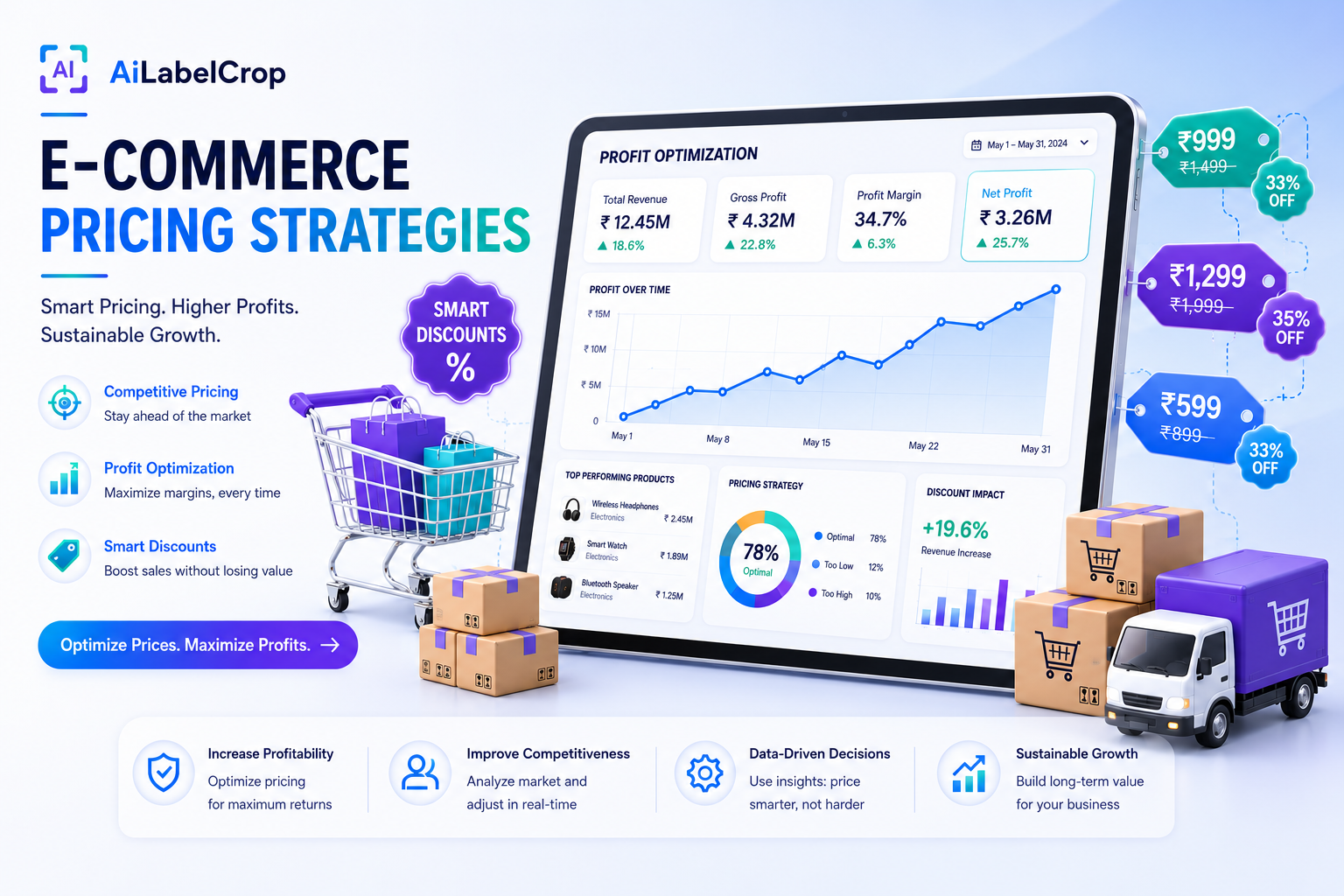
Pricing is one of the most powerful levers in your e-commerce business. A small change in price can either skyrocket your orders or completely kill your profit margins. Many sellers make the mistake of "racing to the bottom" by always having the lowest price, but this is often a trap that leads to business failure.
In this comprehensive guide, we will explore advanced pricing strategies that help you stay competitive on platforms like Meesho, Flipkart, and Amazon while ensuring your business remains highly profitable.
1. The Cost-Plus Pricing Model
This is the foundation of every e-commerce business. Before setting a price, you must know your "Land Cost"—the total cost to get the product into your warehouse.
- Formula: Product Cost + Shipping to Warehouse + Marketplace Commission + Fixed Fees + Shipping Label/Packaging + GST = Total Cost.
- Margin: Add your desired profit margin (e.g., 20%) to this total cost. This ensures you never sell at a loss.
2. Psychological Pricing (The Power of 9)
Humans are programmed to perceive prices ending in "9" as significantly cheaper. This is why ₹499 feels much more affordable than ₹500, even though the difference is only ₹1.
- Odd-Even Pricing: Use prices like ₹299, ₹549, or ₹999 to increase the click-through rate on your listings.
- Prestige Pricing: For premium or luxury items, using round numbers like ₹5000 can actually feel more "high-end" than ₹4999.
3. Anchor Pricing
Anchor pricing involves showing a higher "Original Price" next to a lower "Sale Price." This creates a sense of value in the customer's mind.
Example: Show the MRP as ₹999 and the selling price as ₹449. The customer feels they are "saving" ₹550, which triggers an impulse to buy. Marketplaces like Amazon and Flipkart highlight this "Percentage Off" badge, which significantly boosts visibility.
4. Dynamic Pricing and Bundling
In a fast-moving market, static prices are a disadvantage. Your prices should adapt to competition and inventory levels.
- Bundling: Sell a "Pack of 3" t-shirts for ₹899 instead of 1 t-shirt for ₹349. You save on shipping costs per unit, and the customer gets a perceived deal.
- Inventory-Based Pricing: If you have excess stock of a slow-moving item, drop the price to clear inventory and free up capital. If a product is flying off the shelves, slightly increase the price to maximize profit.
5. Factoring in RTO and Returns
In Indian e-commerce, returns are a reality. If you don't account for them in your pricing, you will lose money. On average, you should factor in a 10-15% return rate into your base price.
If your return cost for a product is ₹80 and 10% of orders are returned, you must add an extra ₹8-10 to the price of every unit sold to cover these losses.
Conclusion
Mastering e-commerce pricing is a continuous process of testing and adjusting. Don't be afraid to experiment with different price points. Monitor your sales data, keep an eye on competitors, and always prioritize your bottom-line profit. For more tools to help you optimize your business, explore our seller resources.
Frequently Asked Questions
Cost-plus pricing is a pricing model where you calculate the total cost to produce, package, ship, and pay marketplace fees for a product, and then add a specific percentage markup (profit margin) to determine the final selling price.
Psychological pricing triggers subconscious emotional buying decisions. For example, using charm pricing like ₹499 instead of ₹500 makes the product feel much cheaper because the brain processes the leftmost digit first.
To account for RTO, calculate your average return shipping cost and multiply it by your category return percentage. Add this amount (usually ₹10 to ₹25 per order) to your base cost to ensure that profitable orders cover return expenses.
🚀 Grow Your Seller Account with Our Tools
Process labels 10x faster, calculate absolute profit metrics and improve product listings instantly!